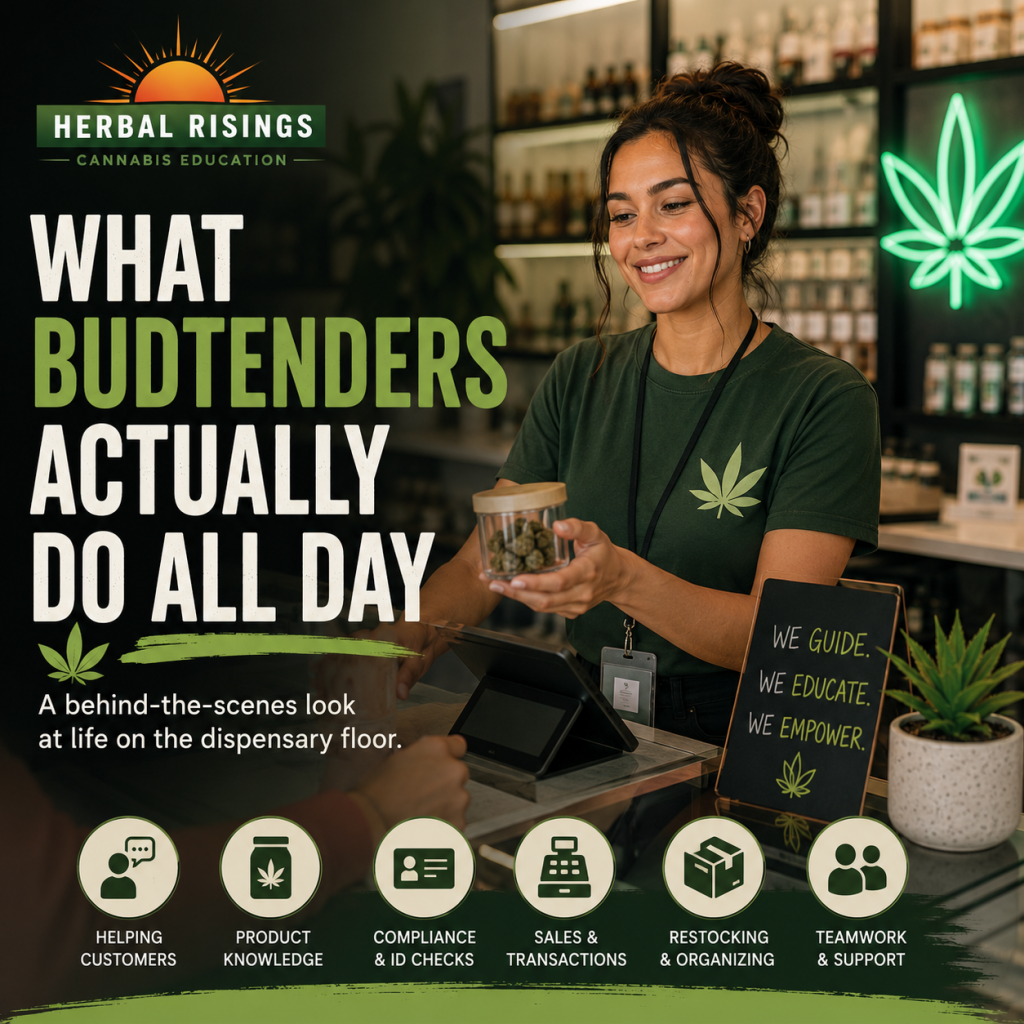
A dispensary menu can be a lot.
There may be strains, brands, cannabinoids, terpene profiles, percentages, package sizes, edible serving amounts, extract types, and rotating specials.
Customers may ask:
What is the difference between indica and sativa?
How strong is this edible?
What are terpenes?
What is a concentrate?
How long does this take to kick in?
What should I start with?
Because of that, budtenders need to explain cannabis in a way that makes sense.
They do not need to sound like a scientist. In fact, sounding too technical can make a customer feel more confused. The goal is to explain the basics clearly, calmly, and responsibly.
A strong budtender can take complicated product information and turn it into plain language.
That skill matters more than showing off.
Budtenders Check IDs and Follow Store Rules
Cannabis retail is regulated.
That means budtenders have to take rules seriously. Depending on the state and store, they may check IDs, follow age requirements, respect purchase limits, use the point of sale system correctly, and follow procedures for different product categories.
This part of the job is not optional.
A dispensary cannot afford careless employees. One mistake can create problems for the store, the license, the team, and the customer.
So yes, budtenders are friendly.
But they also have to be sharp.
They need to know when to ask for identification, when to slow down, when to call a manager, and when to follow the policy even if the customer is annoyed.
That is one reason hiring managers look for people who seem responsible, not just enthusiastic.
They Work the Register and Handle Transactions
Budtenders also help with checkout.
That may include ringing up products, applying discounts, handling cash, checking totals, bagging orders, and making sure the customer receives the correct items.
In many stores, cannabis products are tracked carefully. The details matter. A budtender may need to confirm product names, package sizes, quantities, discounts, and customer information before completing the sale.
This is where retail experience helps.
If you have worked in food service, retail, hospitality, call centers, or sales, some of those skills can transfer. You may already know how to stay calm during rushes, deal with customer questions, handle money, and keep a line moving.
Budtending is cannabis work, but it is still customer facing work.
They Keep the Sales Floor Moving
Dispensaries can get busy.
Some stores have morning rushes. Others get slammed after work, on weekends, during holidays, or when a big promotion hits.
During those times, budtenders need to move with purpose.
They may greet customers, answer questions, pull products, support coworkers, clean counters, restock displays, and help keep the line from turning into a small emotional support group.
Speed matters, but so does accuracy.
A good budtender does not rush so hard they make mistakes. They also do not freeze when the store gets busy. They learn how to stay focused, follow the process, and keep customers moving without making them feel brushed off.
That balance takes practice.
They Restock, Clean, and Organize
Not every part of budtending is glamorous.
There is cleaning.
There is organizing.
There is restocking.
There is making sure displays look good, counters are clean, products are in the right place, and the sales floor feels professional.
Budtenders may help refill displays, check packaging, organize merchandise, wipe surfaces, straighten menus, clean accessories, or support back of house tasks.
This is where some applicants get surprised.
They wanted the fun part of cannabis retail. Then they realize the job also includes the very real retail part.
A dispensary is still a store. It needs to look clean, safe, and organized. Budtenders help make that happen.
They Learn New Products Constantly
Cannabis products change often.
New brands come in. Old products sell out. Menus change. Promotions rotate. Edible options expand. Vape lines update. Concentrates vary. Flower batches may have different potency or terpene information.
Because of that, budtenders are always learning.
They may need to study product labels, ask questions, attend team trainings, read product details, sample information when allowed by law and store policy, and keep track of customer feedback.
The best budtenders do not act like they already know everything.
They stay curious.
That is one of the biggest traits hiring managers notice. A beginner who is willing to learn can be more valuable than someone who acts like they cannot be taught.
They Deal With Different Customer Personalities
Dispensary customers are not all the same.
Some are excited. Some are nervous. Some are in pain. Some are impatient. Some are chatty. Some want education. Some want to get in and out fast.
And yes, some are difficult.
Budtenders need to stay professional with all of them.
That means knowing how to listen, explain, redirect, and stay calm. It also means knowing when a situation needs a manager.
A customer may be upset about a price, a product, a limit, a wait time, or a rule they do not like. The budtender is often the person standing right there when the frustration lands.
So the job requires patience.
It also requires boundaries.
Being friendly does not mean letting people walk all over you. It means staying steady and knowing how to handle the moment.
They Avoid Giving Medical Advice
This part is important.
Customers may ask medical questions. They may want to know what product will help pain, anxiety, sleep, nausea, or other health concerns.
A budtender has to be careful.
In most dispensary settings, budtenders are not doctors. They should not diagnose, treat, or promise that a product will fix a condition.
Instead, they can share general product education, explain store guidance, discuss product categories, and encourage customers to follow safe use practices or speak with a qualified professional when needed.
This is one of the clearest differences between casual cannabis talk and professional cannabis retail.
A budtender needs to know how to be helpful without crossing the line.
They Support the Team
Budtending is not a solo performance.
A dispensary team depends on communication. Budtenders work with managers, reception staff, inventory teams, security, fulfillment staff, and other sales floor employees.
They may need to ask for help, cover a coworker, communicate product issues, report customer concerns, or update the team when something changes.
Good budtenders are not just good with customers.
They are good teammates.
They do not disappear when things get busy. They do not leave messes for someone else. They do not act like every shift is their personal cannabis podcast.
They help the store run better.
They Represent the Dispensary
Every budtender affects the customer’s impression of the store.
A customer may not remember the owner, the inventory manager, or the person who built the menu. But they will remember the person who helped them at the counter.
That means the budtender represents the brand.
Their tone, attitude, appearance, accuracy, and professionalism all matter.
A good interaction can bring someone back. A bad interaction can send them to another dispensary down the road.
That is why hiring managers care about communication skills. They are not only hiring someone to sell products. They are hiring someone to protect the customer experience.
What Skills Do Budtenders Need?
Budtenders need a mix of cannabis knowledge and retail skills.
Some of the most useful skills include:
- Customer service
- Clear communication
- Product learning
- Patience
- Cash handling
- Sales support
- Teamwork
- Attention to detail
- Rule following
- Problem solving
- Professionalism
You do not need to be perfect before applying. However, you do need to show that you can learn, listen, and take the job seriously.
That is what separates a strong applicant from someone who only likes the idea of working around cannabis.
Is Budtending Hard?
Budtending can be fun, but it is still work.
You may be on your feet for hours. You may answer the same question many times a day. You may deal with long lines, confused customers, strict rules, product changes, and busy shifts.
However, for the right person, it can also be rewarding.
You get to learn the industry from the retail floor. You talk to real customers. You see what products people ask for. You build cannabis knowledge through daily experience.
For many people, budtending is the first step into the cannabis industry.
It can lead to other opportunities in management, inventory, training, brand work, purchasing, compliance, or sales.
But it starts with doing the daily work well.
How to Prepare Before You Apply
If you want to become a budtender, start by learning the basics.
Understand common product categories. Practice explaining THC, CBD, terpenes, edibles, flower, concentrates, vapes, and topicals in simple language. Think about how your past work experience connects to dispensary retail.
Also, prepare for the interview.
Be ready to explain why you want the job beyond “I love cannabis.” Talk about customer service, learning, responsibility, and your interest in the industry.
A dispensary manager may not expect you to know everything.
But they will notice if you prepared.
Herbal Risings Can Help You Get Ready
The Herbal Risings Dispensary Track was built for beginners who want to understand cannabis retail before they apply.
The course covers the kind of foundation future budtenders need: product basics, customer service, interview readiness, professionalism, and what dispensary work actually looks like.
It does not promise you a job.
Instead, it helps you show up more prepared.
That matters because hiring managers notice people who take the work seriously before they are even hired.
If you want to stop guessing and start learning, the Dispensary Track is a smart place to begin.