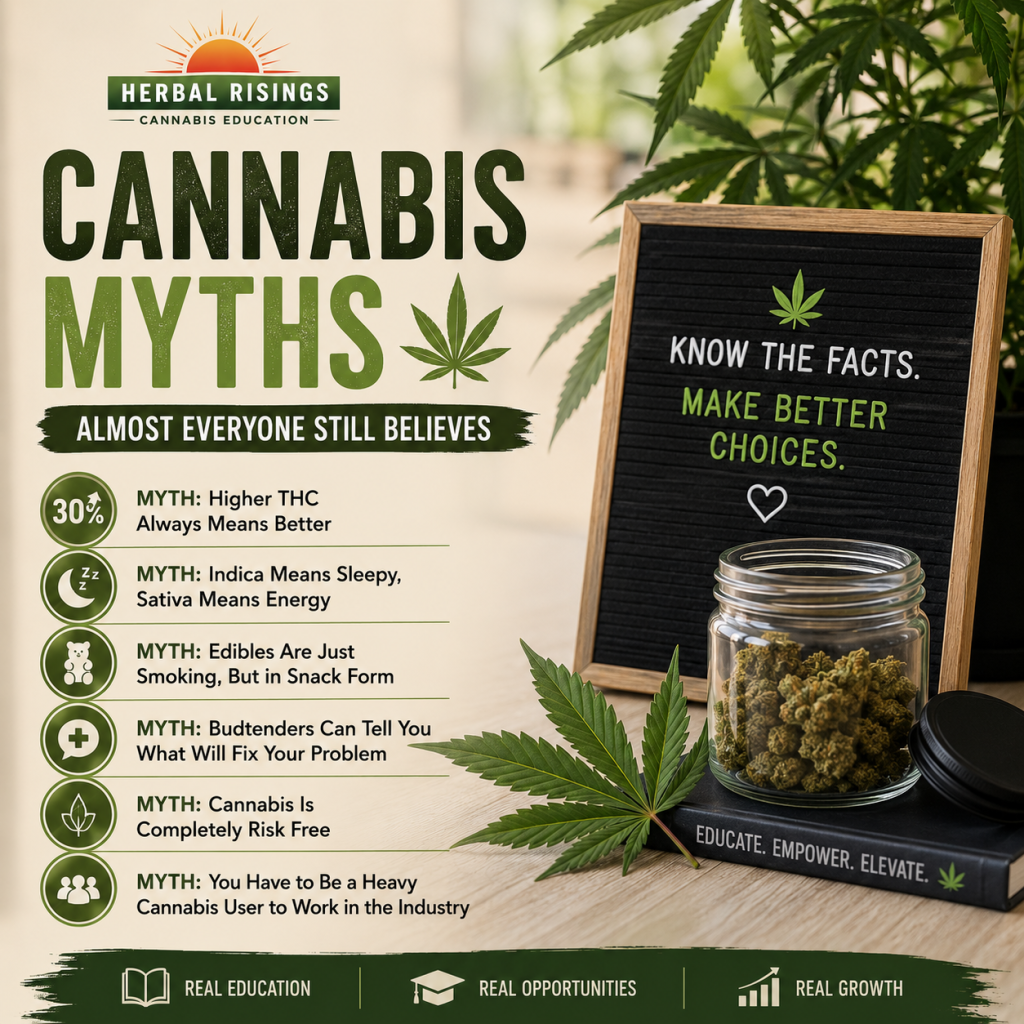
This is one of the biggest myths in cannabis retail.
A lot of shoppers look at THC percentage first and treat it like the entire scoreboard. If one flower has 18 percent THC and another has 30 percent, they assume the stronger number must be the better choice.
Not always.
THC matters, but it is not the whole experience.
Cannabis effects can also be shaped by terpene profile, cannabinoid balance, freshness, product type, dose, tolerance, and the person using it. A high THC product may feel too intense for one person and underwhelming for another.
For some shoppers, a lower THC flower with a better terpene profile may feel smoother, more enjoyable, or more useful for their goals.
So no, the biggest number on the label does not automatically win.
That is why good cannabis education teaches people to look beyond THC alone.
Myth 2: Indica Means Sleepy and Sativa Means Energy
This myth is everywhere.
Indica means couch lock.
Sativa means cleaning your whole house at midnight.
Hybrid means somewhere in the middle.
Simple, right?
Too simple.
In real dispensary conversations, indica, sativa, and hybrid are often used as quick shorthand. However, those labels do not guarantee the same effects for every person.
Modern cannabis genetics are complex. Many products are hybrids, and effects can vary based on cannabinoids, terpenes, dose, tolerance, and individual body chemistry.
That does not mean the categories are useless. They can still help customers begin a conversation. However, they should not be treated like a magic personality test for flower.
A better question is not just, “Is this indica or sativa?”
A better question is, “What kind of experience are you looking for, and what has worked or not worked for you before?”
That is where real guidance begins.
Myth 3: Edibles Are Just Smoking, But in Snack Form
Nope.
Edibles are their own thing.
Smoking or vaping cannabis may produce effects faster because the cannabinoids enter the bloodstream through the lungs. Edibles take longer because they have to move through digestion first.
That delay is where people get into trouble.
Someone eats a gummy, waits twenty minutes, feels nothing, and decides the gummy must be weak. So they take more. Then the first dose finally shows up with luggage, attitude, and a three hour playlist.
Edibles can feel stronger, last longer, and be harder to adjust once the dose is already in your system.
That is why beginner education matters.
Start low.
Wait long enough.
Do not stack doses just because impatience has entered the chat.
Myth 4: Budtenders Can Tell You What Will Fix Your Medical Problem
This is a big one for dispensary job seekers.
Customers may ask a budtender what product will help pain, anxiety, sleep, nausea, stress, or another health concern.
A budtender can educate.
A budtender can explain product types.
A budtender can talk about labels, serving sizes, cannabinoids, terpenes, onset times, and store guidance.
But a budtender should not diagnose, treat, or promise that cannabis will fix a medical condition.
That line matters.
Being helpful without overstepping is part of the job.
A professional budtender knows how to guide the customer while staying within their role. They can say, “Here is what this product is designed for,” or “Here is what customers often ask about,” but they should avoid turning a retail conversation into medical advice.
That protects the customer, the employee, and the dispensary.
Myth 5: Cannabis Is Completely Risk Free Because It Is Natural
Cannabis is a plant.
So are poison ivy, tobacco, and that one mystery leaf your dog should absolutely not eat.
“Natural” does not automatically mean risk free.
Cannabis affects the brain and body. It can impair reaction time, coordination, decision making, and attention. It may also affect people differently depending on age, tolerance, dose, frequency of use, health history, medications, and product strength.
This does not mean cannabis is bad.
It means adults should understand what they are using.
Responsible cannabis education does not need scare tactics. It also does not need fairy dust. The mature approach is simple: cannabis can be useful, enjoyable, and meaningful for many adults, but it still deserves respect.
That is not anti cannabis.
That is pro knowing what you are doing.
Myth 6: If It Is Sold in a Dispensary, It Works the Same for Everyone
Two people can buy the same product and have completely different experiences.
One person may feel relaxed.
Another may feel anxious.
One may need a small dose.
Another may have a much higher tolerance.
One may love a terpene profile that makes someone else feel foggy or uncomfortable.
Cannabis is personal.
Body chemistry, metabolism, experience level, mood, setting, medications, and tolerance can all affect how someone responds.
That is why good budtenders ask questions instead of making blanket promises.
A product can be well made and still not be right for every customer.
That is not failure.
That is cannabis being cannabis.
Myth 7: CBD Cancels Out THC Like a Reset Button
CBD and THC can interact in interesting ways, but CBD is not a magic undo button.
Some people find that CBD helps balance a THC experience. Others may not notice much difference. Product ratio, timing, dose, and individual response all matter.
So while CBD can be part of a more balanced cannabis routine for some people, it should not be presented as a guaranteed rescue plan.
The better approach is prevention.
Choose an appropriate product.
Start with a low dose.
Understand onset time.
Avoid stacking edibles.
Pay attention to your own tolerance.
That is much smarter than assuming you can slam a CBD product later and erase a bad decision.
Myth 8: You Have to Be a Heavy Cannabis User to Work in the Industry
Not true.
Cannabis knowledge helps.
Product curiosity helps.
Respect for the plant helps.
However, being the biggest consumer in the room does not automatically make someone a good cannabis employee.
Dispensaries need people who can communicate, follow rules, learn products, show up on time, support customers, work with a team, and stay professional.
Some strong applicants come from retail, hospitality, food service, sales, health and wellness, inventory, customer service, security, or management backgrounds.
You do not need to make cannabis your entire personality to work in cannabis.
In fact, please do not.
A good cannabis worker understands the difference between personal interest and professional service.
Myth 9: Cannabis Jobs Are Easy Because the Industry Is Fun
The cannabis industry can be exciting, but dispensary work is still work.
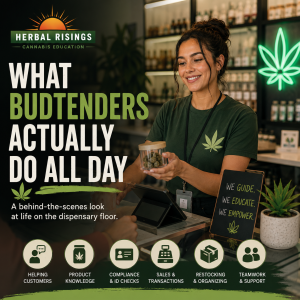
Budtenders stand for long hours, answer repeated questions, handle transactions, follow rules, deal with difficult customers, restock products, keep the floor clean, and learn changing menus.
There are busy shifts.
There are strict procedures.
There are customers who do not understand limits.
There are products that sell out right after someone promised their friend they would grab one.
There are real workplace expectations.
Cannabis jobs can be meaningful and fun, but they are not a break from professionalism.
They are a chance to bring professionalism into a newer industry.
Myth 10: All Cannabis Education Is the Same
Cannabis education can mean a lot of things.
Some courses focus on cultivation.
Some focus on science.
Some focus on compliance.
Some focus on medical cannabis.
Some focus on business.
Others are built for people who want to work in dispensaries and need practical job readiness.
That difference matters.
A person trying to become a budtender may not need an advanced cultivation course right away. They may need product basics, customer service language, interview preparation, retail expectations, and a clear understanding of the dispensary environment.
The best course depends on the goal.
For future dispensary workers, education should help them become more prepared, more professional, and more confident before they apply.
That is the lane Herbal Risings cares about.
Myth 11: Cannabis Knowledge Means Memorizing Strain Names
Knowing strain names can help, but it is not enough.
Menus change.
Brands rotate.
Product names come and go.
A good cannabis foundation goes deeper than memorizing what is popular this month.
You want to understand product categories, cannabinoids, terpenes, dose, onset time, serving size, customer questions, store rules, and safe communication.
That kind of knowledge travels with you.
If you only memorize strain names, you may sound prepared until the menu changes.
If you understand the basics, you can keep learning no matter where you work.
Myth 12: Everyone Already Knows the Basics Now
Legal cannabis has become more common, but that does not mean everyone understands it.
Many adults are still confused by labels, dosing, product types, and the difference between flower, edibles, concentrates, vapes, tinctures, and topicals.
Some people are returning to cannabis after years away and are surprised by modern potency.
Others are brand new and feel embarrassed to ask beginner questions.
That is why education still matters.
Cannabis may be more visible now, but visibility is not the same as understanding.
A good budtender can help close that gap.
Why These Myths Matter
Cannabis myths affect how people shop, how they use products, how they apply for jobs, and how they talk to customers.
Bad information can make someone overconsume.
It can make a job applicant sound unprepared.
It can make a customer feel more confused.
It can also make cannabis education seem less serious than it really is.
The better we explain cannabis, the stronger the industry becomes.
That does not mean making cannabis boring.
It means making it smarter.
How Herbal Risings Helps Clear the Fog
Herbal Risings was built for people who want cannabis education that feels clear, practical, and grounded.
Our Dispensary Track helps beginners understand the basics of cannabis retail, product language, customer service, and job readiness.
The goal is not to turn you into an expert overnight.
The goal is to help you stop guessing.
Because when you understand the myths, the facts, and the real expectations of cannabis work, you can show up with more confidence.
That matters whether you are applying for a dispensary job, shopping for yourself, or simply trying to understand the industry better.